Severe hepatotoxicity was reported for LNP-ASOap at 0.37 mg/kg, while LNP-ASOgr did not show the same response at that dose. The authors attributed the difference to ASO sequence chemistry rather than empty-carrier toxicity.
Cargo-specific mouse study · Main Results 3.6; Fig. 6sales@dcchemicals.com
ssPalmO-Phe
Formulation & Performance
Literature-reported formulation composition
| Component | Reported molar ratio | Role |
|---|---|---|
| ssPalmO-Phe | 70 | Ionizable lipid |
| Cholesterol | 30 | Sterol |
| DMG-PEG2000 | 1.5 | PEG lipid |
| Reported ratio sum | 101.5 | Original ratio retained |
Component molecular weights and calculated amounts
Composition retained from the cited study below. Research planning aid only. Results cover lipid component weights and do not include RNA, buffer, solvent, process loss or an N/P ratio.
| Component | Molecular weight | Molar parts | Normalized mol% | Amount (µmol) | Weight (mg) |
|---|---|---|---|---|---|
| ssPalmO-Phe | 68.966 | 71.7769 | 84.2501 | ||
| Cholesterol | 29.557 | 30.7615 | 11.8939 | ||
| DMG-PEG2000 | 1.478 | 1.5381 | 3.8560 |
Calculated total: 100.0000 mg lipid.
Calculated catalog planning quantities; RNA, solvent and process loss are excluded. DMG-PEG2000 uses 2507. Component mass = total lipid mass × molar parts × molecular weight / sum(parts × molecular weight). This conversion does not infer N/P.
Literature-reported performance for the cited formulation
Literature-reported112 nm1.5 mol% additional DMG-PEG2000 formulationMain Table 1
Literature-reported0.135Same formulationMain Table 1
Literature-reported100%Same formulationMain Table 1
Literature-reported98.7 ± 1.3%40 microgram/kg siFVII · 24 hMain Results 3.3; Fig. 4
Literature-reported4.4 microgram/kgMouse dose-response fit · 24 hMain Results 3.3; Fig. 4
Cargo-specific formulation evidence
| Cargo | Reported lipid ratio | Lipid:cargo basis | Key result |
|---|---|---|---|
| siFVII | ssPalmO-Phe/Cholesterol/DMG-PEG2000 = 70/30/+1.5 | 400 nmol lipid per microgram siRNA | ED50 4.4 microgram/kg; 98.7 ± 1.3% knockdown at 40 microgram/kg |
| ASO | ssPalmO-Phe/DOPC/Cholesterol/DMG-PEG2000 = 40/20/40/+1.5 | 25 nmol lipid per microgram ASO | IC50 0.0097 mg/kg ASOap; 0.092 mg/kg ASOgr |
Main Methods 2.2 and 2.5; Results 3.3 and 3.5. The two formulations must not be interchanged.
Additional reported findings
Empty LNP doses of 49-782 mg/kg total lipid (29-470 mg/kg ssPalmO-Phe) did not significantly alter AST or ALT in the reported 96 h experiment.
This does not establish a general safe dose · Main Results 3.6; Fig. 6Literature Data DisclaimerAll formulation parameters and performance values shown in this section are derived from the cited publication and are provided for reference only. These results were obtained using the specific materials, formulation process, cargo, dose, analytical method, model and administration route described in that study. Unless otherwise stated, the data were not generated or independently verified by DC Chemicals. DC Chemicals supplies the lipid compound only and does not guarantee that customers will reproduce the reported LNP properties or biological performance.
The administration route shown above was used in the cited study and is not a clinical-use instruction or recommendation by DC Chemicals.
The administration route shown above was used in the cited study and is not a clinical-use instruction or recommendation by DC Chemicals.
Cited literature for this formulation and performance datasetTanaka H, et al. Delivery of Oligonucleotides Using a Self-Degradable Lipid-Like Material. Pharmaceutics. 2021;13(4):544. DOI: 10.3390/pharmaceutics13040544
The default calculator uses the siRNA formulation. The separate ASO formulation and its performance are presented as a comparison, not as a substitute recipe.
The default calculator uses the siRNA formulation. The separate ASO formulation and its performance are presented as a comparison, not as a substitute recipe.
Published study figures
Original publication figures illustrating the cited formulation and biological results. Select an image to view it at full size.
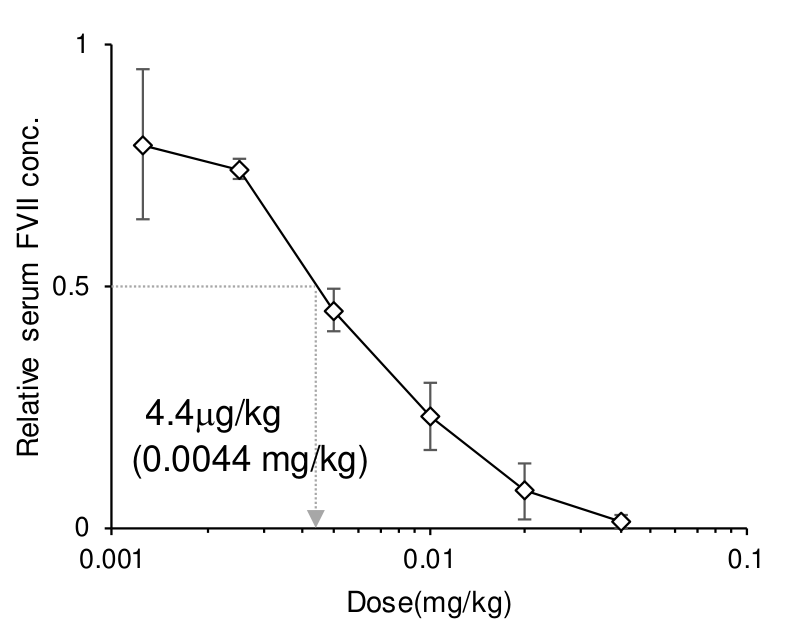
Figure 4 — Original dose-response curve for siRNA delivered in ssPalmO-Phe LNPs
Original dose-response curve for siRNA delivered in ssPalmO-Phe LNPs. The reported ED50 is 4.4 micrograms/kg for this formulation and endpoint. Mice, n=3/group; intravenous administration; serum factor VII at 24 h. ssPalmO-Phe/cholesterol 70/30 with 1.5% DMG-PEG2000.
Tanaka H et al. (2021). Hepatic factor VII knockdown. Original article / figure · CC BY 4.0. Complete figure extracted from publisher PDF, page 8; surrounding article text omitted; axes and error bars unchanged.
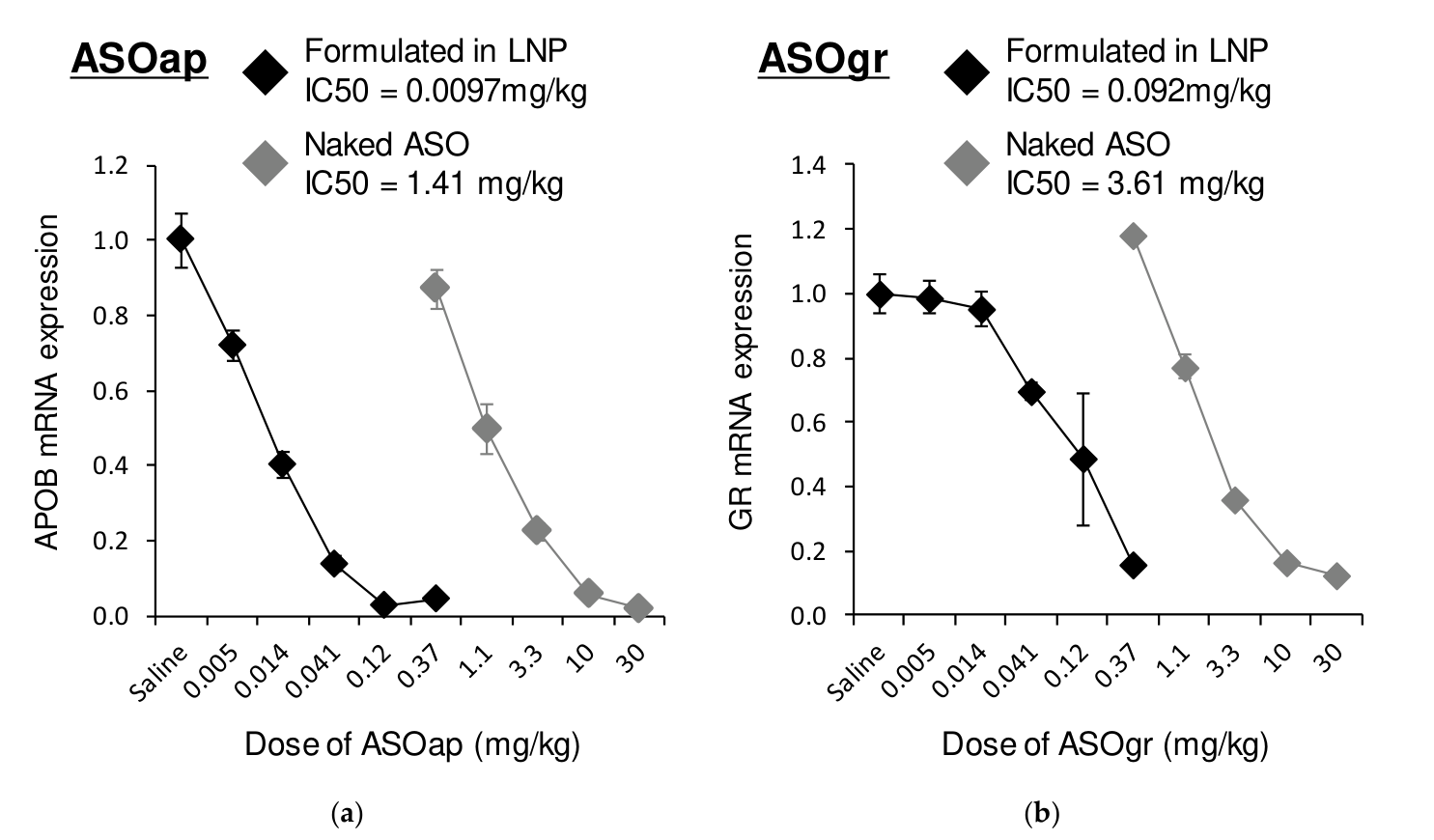
Figure 8 — Original figures compare hepatic ApoB and Nr3c1/GR transcript suppression by ssPalmO-Phe-formulated versus naked antisense oligonucleotides
Original figures compare hepatic ApoB and Nr3c1/GR transcript suppression by ssPalmO-Phe-formulated versus naked antisense oligonucleotides. These ASO results use a different recipe from the siRNA experiment. Mice, n=4/group; ssPalmO-Phe/DOPC/cholesterol 40/20/40 with 1.5% DMG-PEG2000; lipid/ASO 25 nmol/microgram. RNA-expression values normalized to saline.
Tanaka H et al. (2021). Antisense delivery in mice. Original article / figure · CC BY 4.0. Complete figure panels a-b extracted from publisher PDF, page 12; surrounding text omitted; axes, legends and error bars unchanged.