The paper attributes the higher activity of TNT-b10 over TNT-a10 to changing the positions of the hydroxyl and amino groups; this is a matched structural comparison under the study's formulation conditions.
· PDF pp. 2-3, Figs. 1-2.sales@dcchemicals.com
TNT-b10
Formulation & Performance
Literature-reported formulation composition
| Component | mol% | Role |
|---|---|---|
| TNT-b10 | 20 | Ionizable lipid |
| DOPE | 30 | Helper phospholipid |
| Cholesterol | 40 | Sterol |
| DMG-PEG2000 | 0 | PEG lipid |
| Reported total | 90 | Source values retained |
Formulation calculator unavailable. The paper prints the initial TNT-b10/DOPE/cholesterol/DMG-PEG2000 ratio as 20/30/40/0 (sum 90 mol%) and separately prints F25 and O-TNT-b10 ratios. Because the source does not define a missing component or a normalization basis, the fixed calculator is disabled. Obtain and verify the complete composition and component molecular weights before planning component quantities.
Literature-reported performance for the cited formulation
Literature-reportedF25 was approximately two-fold higher than the initial formulationHep3B cells, TNT-b10 LLNs · Initial TNT-b10 formulationPDF p. 3, Fig. 3.
Literature-reportedDose-dependent luciferase expression at 25-200 ng/wellO-TNT-b10 LLNs in Hep3B cells · TNT-a10 LLNsPDF p. 4, Fig. 4B.
Literature-reportedApproximately 10-fold higher than TNT-a10 under the same formulation ratioO-TNT-b10 LLNs in Hep3B cells · TNT-a10 LLNsPDF pp. 4-5, Fig. 4B and text.
Literature-reportedStrong liver and spleen luciferase expression; IV spleen signal was more than 10-fold higher than liver signalO-TNT-b10 FLuc mRNA LLNs, 0.5 mg/kg · Free mRNA and other injection routesPDF pp. 5-6, Fig. 6.
Literature-reportedStable for at least four weeks after PEGylationO-TNT-b10 LLNs · Non-PEGylated F25PDF p. 3-4, Fig. 4A.
Additional reported findings
The optimized PEGylated formulation produced strong liver and spleen signal, with a spleen-biased signal after IV administration.
· PDF pp. 5-6, Fig. 6.Literature Data DisclaimerAll formulation parameters and performance values shown in this section are derived from the cited publication and are provided for reference only. These results were obtained using the specific materials, formulation process, cargo, dose, analytical method, model and administration route described in that study. Unless otherwise stated, the data were not generated or independently verified by DC Chemicals. DC Chemicals supplies the lipid compound only and does not guarantee that customers will reproduce the reported LNP properties or biological performance.
The administration route shown above was used in the cited study and is not a clinical-use instruction or recommendation by DC Chemicals.
The administration route shown above was used in the cited study and is not a clinical-use instruction or recommendation by DC Chemicals.
Cited literature for this formulation and performance datasetLi B, Luo X, Deng B, et al. Effects of local structural transformation of lipid-like compounds on delivery of messenger RNA. Scientific Reports. 2016;6:22137. DOI: 10.1038/srep22137
All performance claims apply to the reported TNT-b10 LLN formulations, cell assays and mouse experiment, not to the neat lipid alone.
All performance claims apply to the reported TNT-b10 LLN formulations, cell assays and mouse experiment, not to the neat lipid alone.
Published study figures
Original publication figures illustrating the cited formulation and biological results. Select an image to view it at full size.
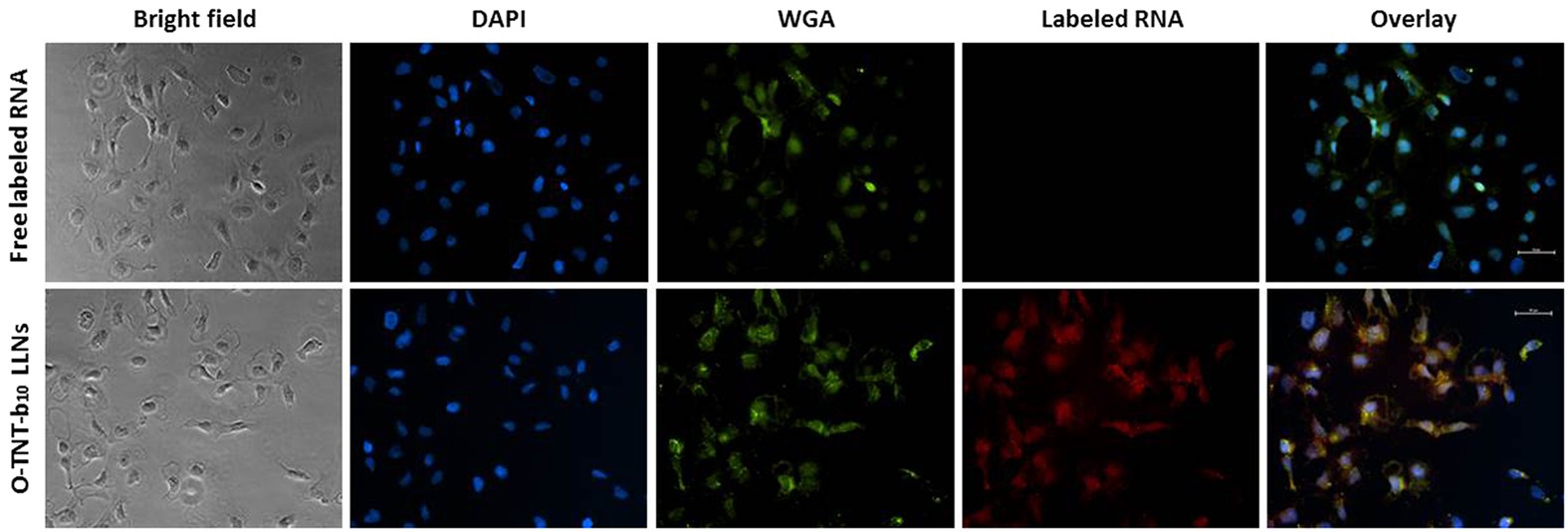
Figure 5 — Fluorescence microscopy of RNA uptake into Hep 3B cells
Fluorescence microscopy of RNA uptake into Hep 3B cells. Hep 3B cells; optimized O-TNT-b10 LLNs versus free labeled RNA; 3 h; scale bar 50 µm.
Li B, Luo X, Deng B, et al. (2016). Effects of local structural transformation of lipid-like compounds on delivery of messenger RNA. Original article / figure · CC BY 4.0. Original figure reproduced without changes.
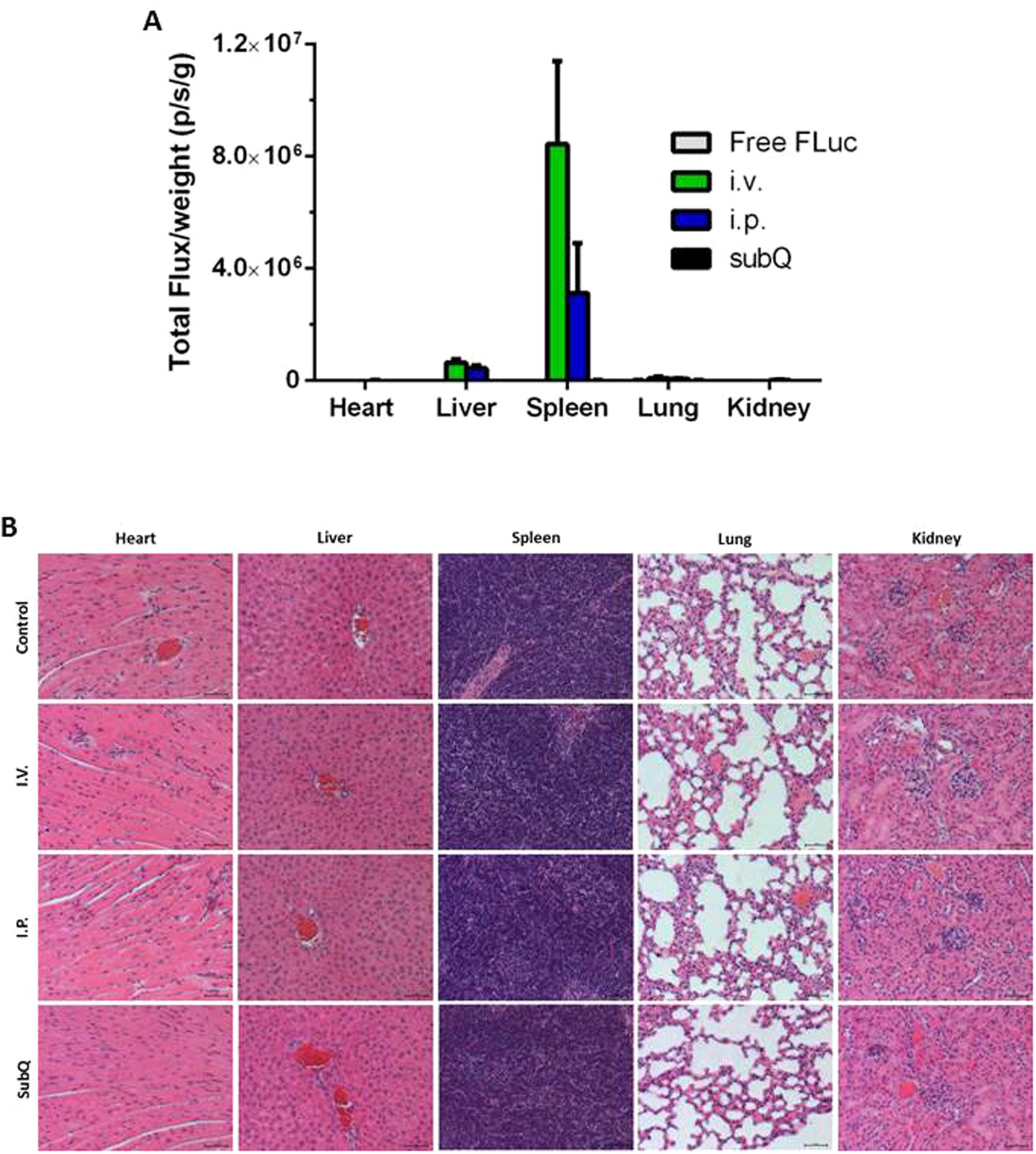
Figure 6 — In vivo expression by administration route and organ histology
In vivo expression by administration route and organ histology. Mice; luciferase mRNA 0.5 mg/kg; intravenous, intraperitoneal or subcutaneous administration; expression readout at 6 h.
Li B, Luo X, Deng B, et al. (2016). Effects of local structural transformation of lipid-like compounds on delivery of messenger RNA. Original article / figure · CC BY 4.0. Original figure reproduced without changes.