sales@dcchemicals.com
TCL053
Formulation & Performance
Literature-reported formulation composition
| Component | mol% | Role |
|---|---|---|
| TCL053 | 60 | Ionizable lipid |
| DPPC | 10.6 | Additional lipid components |
| Cholesterol | 27.3-28.7 | Sterol |
| DMG-PEG2000 | 0.7-2.1 | PEG lipid |
| Reported total | Not reported | Source values retained |
Formulation calculator unavailable. A calculation is not enabled where component molecular weights or a fixed molar recipe are unverified. Methods give a formulation range, not a unique selected LNP-I recipe; SI is needed to resolve exact cholesterol/PEG proportions. Cas9 mRNA and sgRNAs were encapsulated separately. No fixed formulation calculator is enabled. Obtain and verify the complete composition and component molecular weights before planning component quantities.
Literature-reported performance for the cited formulation
Literature-reportedDetected at 4 h; undetectable by day 71 or 10 micrograms Luc mRNA, intramuscular; different from durable genomic editingMain PDF pp.2-3, Fig.1
Literature Data DisclaimerAll formulation parameters and performance values shown in this section are derived from the cited publication and are provided for reference only. These results were obtained using the specific materials, formulation process, cargo, dose, analytical method, model and administration route described in that study. Unless otherwise stated, the data were not generated or independently verified by DC Chemicals. DC Chemicals supplies the lipid compound only and does not guarantee that customers will reproduce the reported LNP properties or biological performance.
The administration route shown above was used in the cited study and is not a clinical-use instruction or recommendation by DC Chemicals.
The administration route shown above was used in the cited study and is not a clinical-use instruction or recommendation by DC Chemicals.
Cited literature for this formulation and performance datasetLow immunogenicity of LNP allows repeated administrations of CRISPR-Cas9 mRNA into skeletal muscle in mice. DOI: 10.1038/s41467-021-26714-w DOI: 10.1038/s41467-021-26714-w
Methods give a formulation range, not a unique selected LNP-I recipe; SI is needed to resolve exact cholesterol/PEG proportions. Cas9 mRNA and sgRNAs were encapsulated separately. No fixed formulation calculator is enabled.
Methods give a formulation range, not a unique selected LNP-I recipe; SI is needed to resolve exact cholesterol/PEG proportions. Cas9 mRNA and sgRNAs were encapsulated separately. No fixed formulation calculator is enabled.
Published study figures
Original publication figures illustrating the cited formulation and biological results. Select an image to view it at full size.
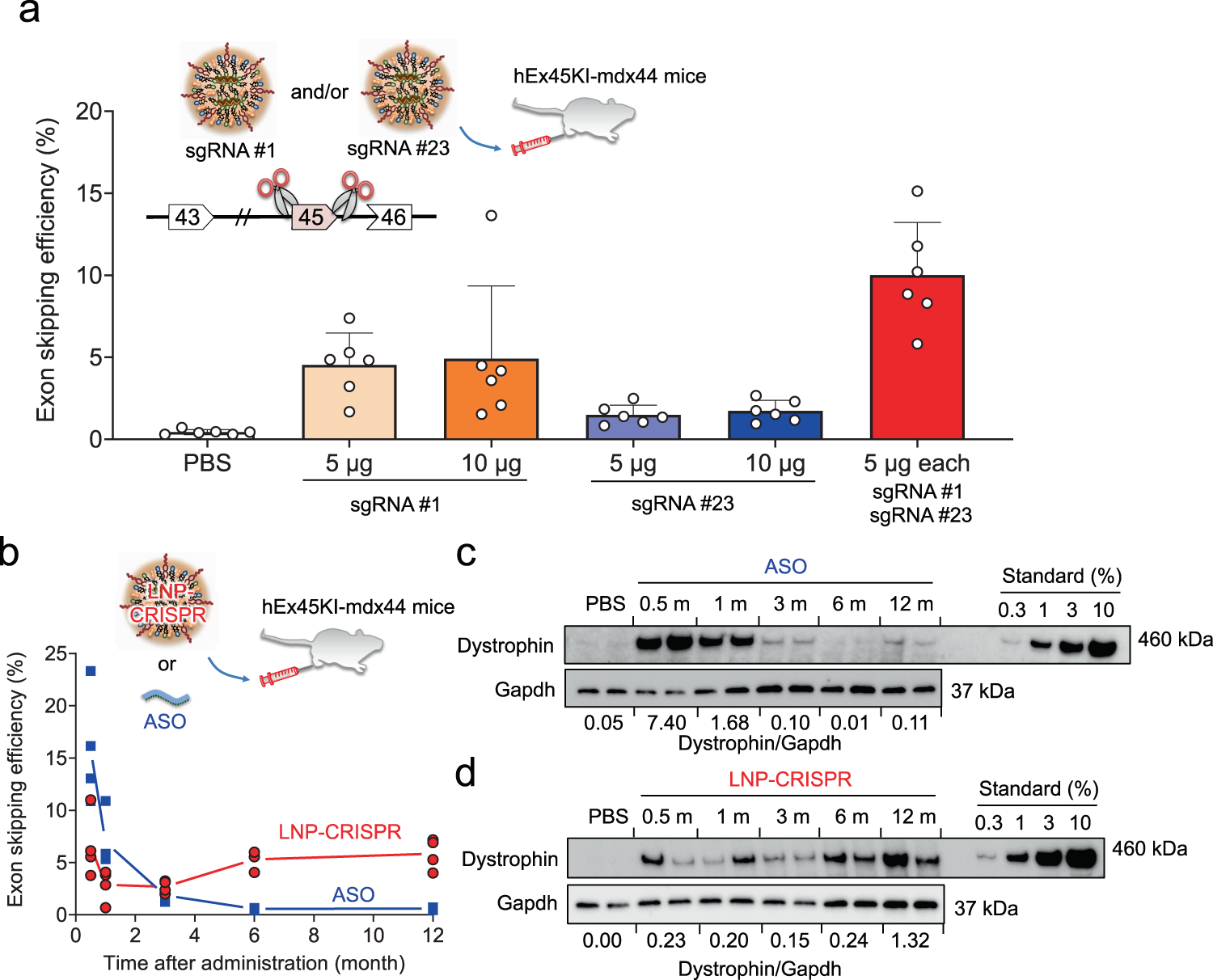
Figure 4 — Dystrophin exon skipping and protein recovery
TCL053-based LNP-CRISPR is evaluated in a humanized dystrophin mouse model. The figure separates exon-skipping measurements from dystrophin protein recovery and includes an antisense comparator over 12 months. hEx45KI-mdx44 mice; local intramuscular administration; single-dose longitudinal evaluation; n=6 for panel a and n=4 at each longitudinal time point.
Kenjo et al. (2021), Nature Communications, Figure 4. CC BY 4.0. Original figure unchanged. Original article / figure · CC BY 4.0. Unmodified complete original figure; displayed at responsive size.